
Uehiro Future Scientists Program Trainee Interview Vol.5
―Recreating the Brain's Complex Environment for Better Drug Development―
Training
Meet Mr. Ryohei Kuwahara, a sixth-year undergraduate student in the Department of Drug Discovery and Development Sciences at Tokyo University of Pharmacy and Life Sciences. He is conducting research on the blood-brain barrier (BBB) at his university.
The BBB is the brain's natural defense mechanism that prevents harmful substances in the bloodstream from entering the brain. While it plays a vital role in protecting in the brain, it also presents a challenge by preventing therapeutic drugs from reaching the brain when needed. To address this challenge, Mr. Kuwahara aims to use iPS cells to more accurately reproduce the complex environment of the human brain and contribute to drug development research.
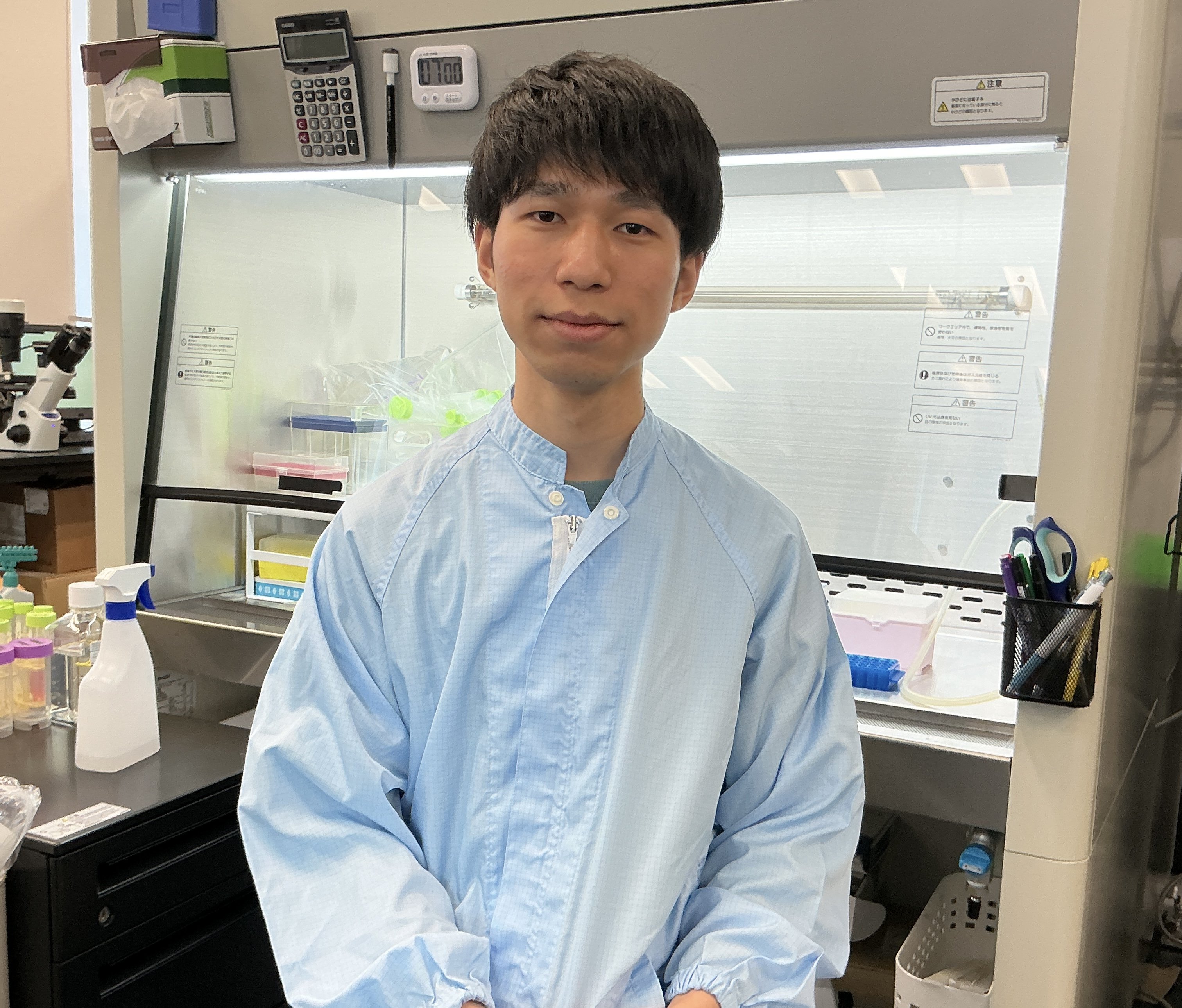
Ryohei Kuwahara
Sixth-year undergraduate student
Department of Drug Discovery and Development Sciences
Tokyo University of Pharmacy and Life Sciences
Mr. Kuwahara had long been interested in pharmaceutical sciences and chose to attend Tokyo University of Pharmacy and Life Sciences, the alma mater of one of his high school teachers. Motivated by a desire to develop treatments for diseases affecting the brain and nervous system, he joined his current laboratory, which focuses on the BBB.
In the laboratory, researchers create BBB models by combining multiple types of cells that make up the brain’s blood vessels. Mr. Kuwahara is working to further refine these models and develop a system for evaluating whether drug candidates can successfully cross the BBB and reach the brain.
Becoming increasingly interested in studying the cells themselves, he decided to participate in this three-week program.
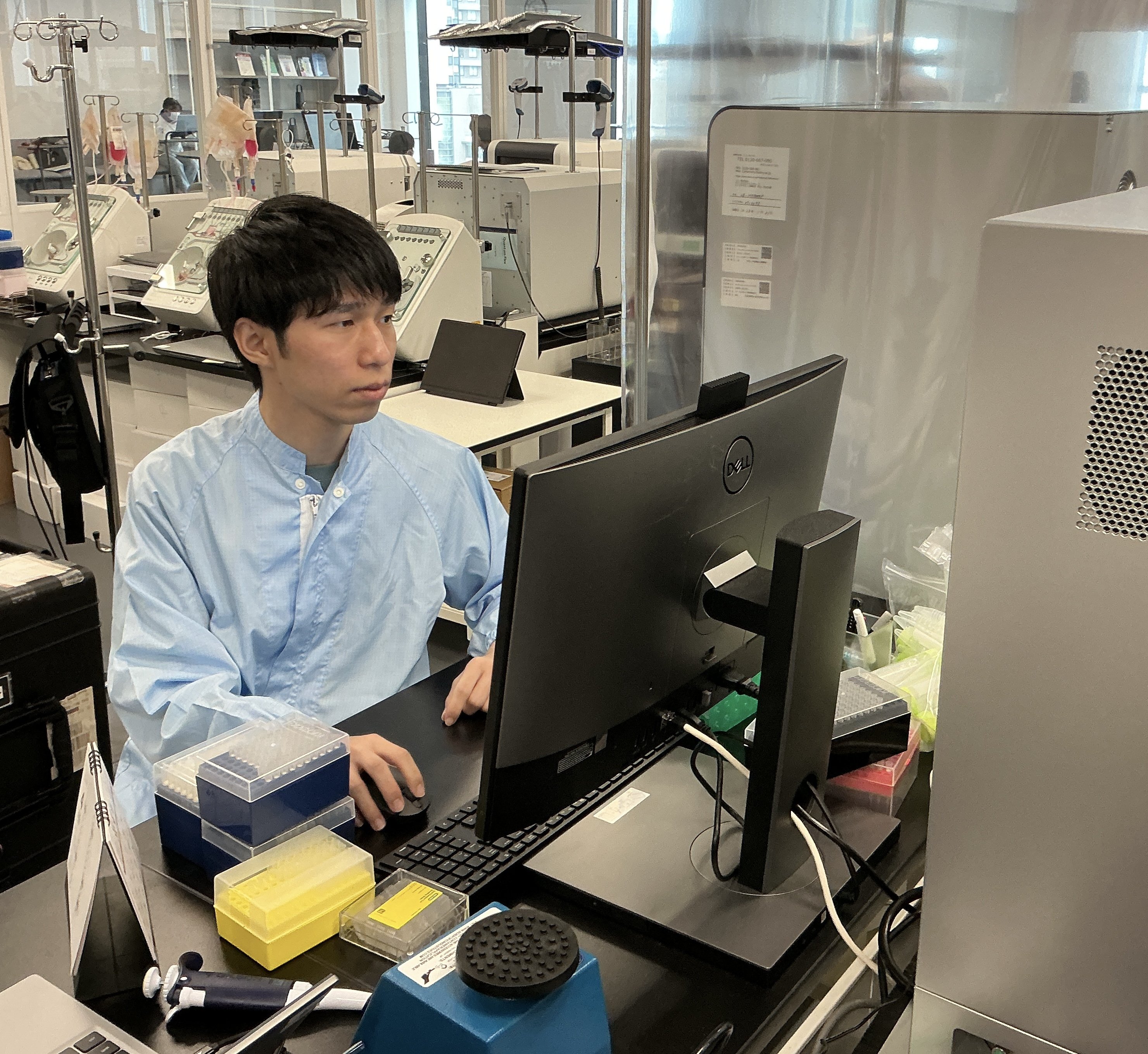
During the program, he first conducted experiments to differentiate iPS cells into vascular cells. After reviewing relevant scientific literature, he explored ways to generate cells that more closely resemble those of the BBB. He then carried out the experiments step by step, while discussing his findings with Dr. Tomoaki Kato, who supervised his work.
In addition, he worked on the generation of neural and vascular organoids and even took on the challenge of differentiating iPS cells into cardiomyocytes, an area that had long interested him. Although the program lasted only three weeks, it provided him with a broad range of valuable research experiences.
Looking back on the experience, Mr. Kuwahara says, “The three-week training period was far too short!” He found that working with iPS cells was quite different from handling the cells he had previously used, and many things that he had initially thought would be possible did not go as planned in practice.
“I would like to learn more about iPS cells and pursue research that further unlocks their potential,” he reflects.
Mr. Kuwahara hopes to pursue a career in developing therapies for brain diseases. In particular, he aspires to become a researcher who can deepen our understanding of the largely unexplored mechanisms of the central nervous system and make fundamental discoveries that will support future drug development.
Building on the techniques and insights he gained during the program, he aims to advance his research using models that more accurately replicate the physiological environment of the human body.
Mr. Kuwahara also enjoyed exploring the Kansai region. On his days off, he visited the Kuchu Teien Observatory at the Umeda Sky Building in Osaka and spent time at Osaka Aquarium Kaiyukan, where he observed marine life, including sharks.
The CiRA Foundation will continue to support the career development of undergraduate and graduate students through the Uehiro Future Scientists Program.