
Uehiro Future Scientists Program Trainee Interview Vol.6
―Understanding How Complex Nervous Systems Emerge―
Training
Meet Ms. Ana Danicel, a first-year graduate student at ENS – PSL in France. She is pursuing a career as a neuroscientist.
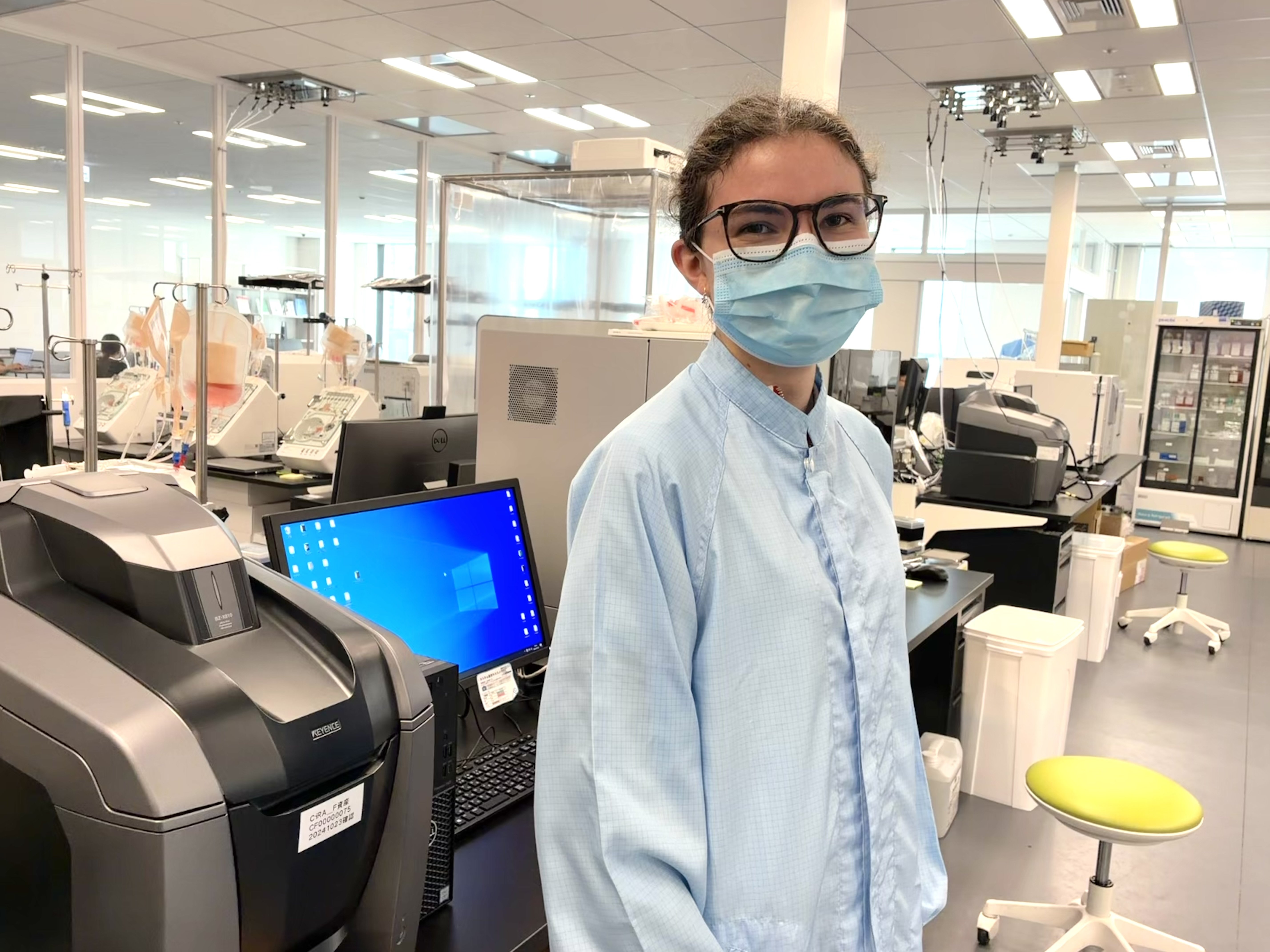
Ana Danicel
First-year graduate student
Neuroscience Major
École Normale Supérieure (ENS) – Université de recherche Paris Sciences et Lettres (PSL), France
Q: What are you currently studying and researching at ENS – PSL?
Danicel:
I am currently pursuing a master’s degree in Neuroscience at ENS – PSL, complemented by courses in bioinformatics and developmental biology. During my first year (Master 1), I had the opportunity to follow a broad range of courses covering neuroscience, developmental biology, data analysis, and chemistry.
Before joining ENS – PSL, I completed a double bachelor’s degree in Biology and Chemistry at Sorbonne University. Building on that interdisciplinary background, I chose to further deepen my knowledge in chemistry alongside neuroscience. For instance, I took courses in bioinorganic chemistry, which I found particularly engaging as they highlighted the connections between biology and chemistry, such as the role of organometallic compounds in medicine.
Q: What motivated you to study neuroscience at ENS – PSL?
Danicel:
I have long been fascinated by the brain and, in particular, by neurodegenerative diseases. This interest was what led me to pursue neuroscience at ENS – PSL, where I could develop a strong interdisciplinary foundation.
A key moment that reinforced my interest was during my undergraduate studies at Sorbonne University, when I was first introduced to the complexity of neural systems and the challenges involved in understanding their development and their dysfunctions.
Q: What motivated you to participate in this internship program?
Danicel:
For my master’s 1 internship, I was looking to gain hands-on experience in cell culture, particularly in the generation and study of brain organoids derived from induced pluripotent stem cells (iPSCs). To that effect I reached out to Dr. Yohei Hayashi (Unit Leader at the Research and Development Center), whose work closely aligned with my interests.
He introduced me to the CiRA Foundation program, which I saw as a unique opportunity to join his team and work on a research topic I am deeply interested in. I was especially motivated by the chance to develop advanced experimental skills while being immersed in an international research environment in stem cell biology and regenerative medicine.
Q: Could you tell us what you learned or what kinds of experiments you worked on during this program?
Danicel:
During this program, I was mainly involved in experiments related to cell and brain organoid culture from iPSCs. I learned how to maintain and passage iPSCs under sterile conditions, as well as how to initiate and monitor the formation of brain organoids.
In addition, I gained hands-on experience with molecular and cellular analysis techniques. For example, I performed RT-qPCR to analyze gene expression and used FACS to characterize cell populations. As the project progresses, I expect to further expand my technical skills by being involved in additional experiments and analytical methods.
Q: How did you feel about participating in this program?
Danicel:
Participating in this program was a very rewarding experience for me. It gave me the opportunity to learn directly from Dr. Hayashi and his team, particularly Dr. Yan Lu, whose help was invaluable throughout my internship. I greatly appreciated being part of this team in such a supportive research environment.
Beyond the scientific aspect, I was also very happy to experience life in Japan, which made the program both professionally and personally enriching.
Q: Besides your research activities, were there anything you especially enjoyed or found memorable about Japan ?
Danicel:
This was my first time visiting Japan. Beyond my research activities, I really enjoyed exploring Osaka and Kyoto, as well as hiking in the surrounding mountains. One of my most memorable experiences was visiting Mount Yoshino in Nara Prefecture during the cherry blossom season where I saw around 30,000 trees in full bloom over the course of a weekend.
Q: How would you like to apply what you learned in this program to your current study and future career?
Danicel:
I would like to apply the knowledge and skills I gained during this experience to both my current studies and my future career. In particular, I have developed a better understanding of how to design and conduct rigorous scientific experiments, as well as practical expertise in cell culture and brain organoid techniques.
These skills will be directly valuable for my ongoing master’s training and will help me prepare for a future PhD. In addition to that, this experience has deepened my interest in stem cell biology and neuroscience, which I hope to continue exploring in my future academic career.
Q: After completing your master’s program, what kind of career path are you hoping to pursue?
Danicel:
After completing my master’s degree at ENS-PSL, I aim to pursue a PhD at the intersection of developmental biology and neuroscience. Currently, I am particularly interested in understanding how complex neural systems emerge during development.
Following my PhD, I would like to continue with a postdoctoral position abroad, ideally in an international research environment, maybe in Japan, as I have greatly appreciated both the scientific atmosphere and my overall experience here.
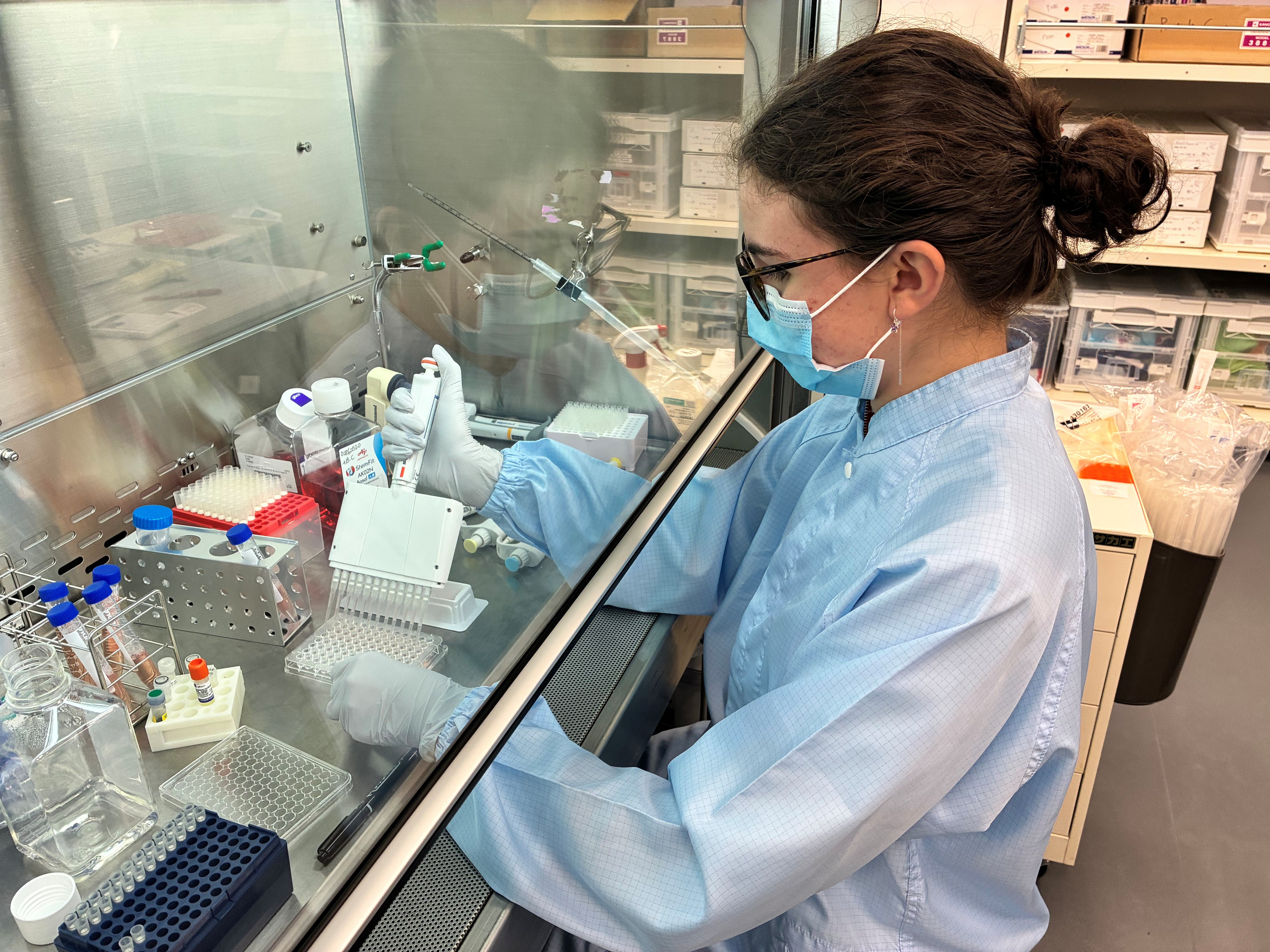
The CiRA Foundation will continue to support the career development of undergraduate and graduate students through the Uehiro Future Scientists Program.