
Uehiro Future Scientists Program Trainee Interview Vol.7
―Crossing Disciplines, Creating New Questions―
Training
Meet Mr. Roy Xiao, a second-year graduate student in the Graduate Institute of Communication Engineering (Major in Data Science and Intelligent Networks) at National Taiwan University. As an intern at a biotech startup in Taiwan, he aims to combine AI with a deeper understanding of the experimental context behind biomedical data.
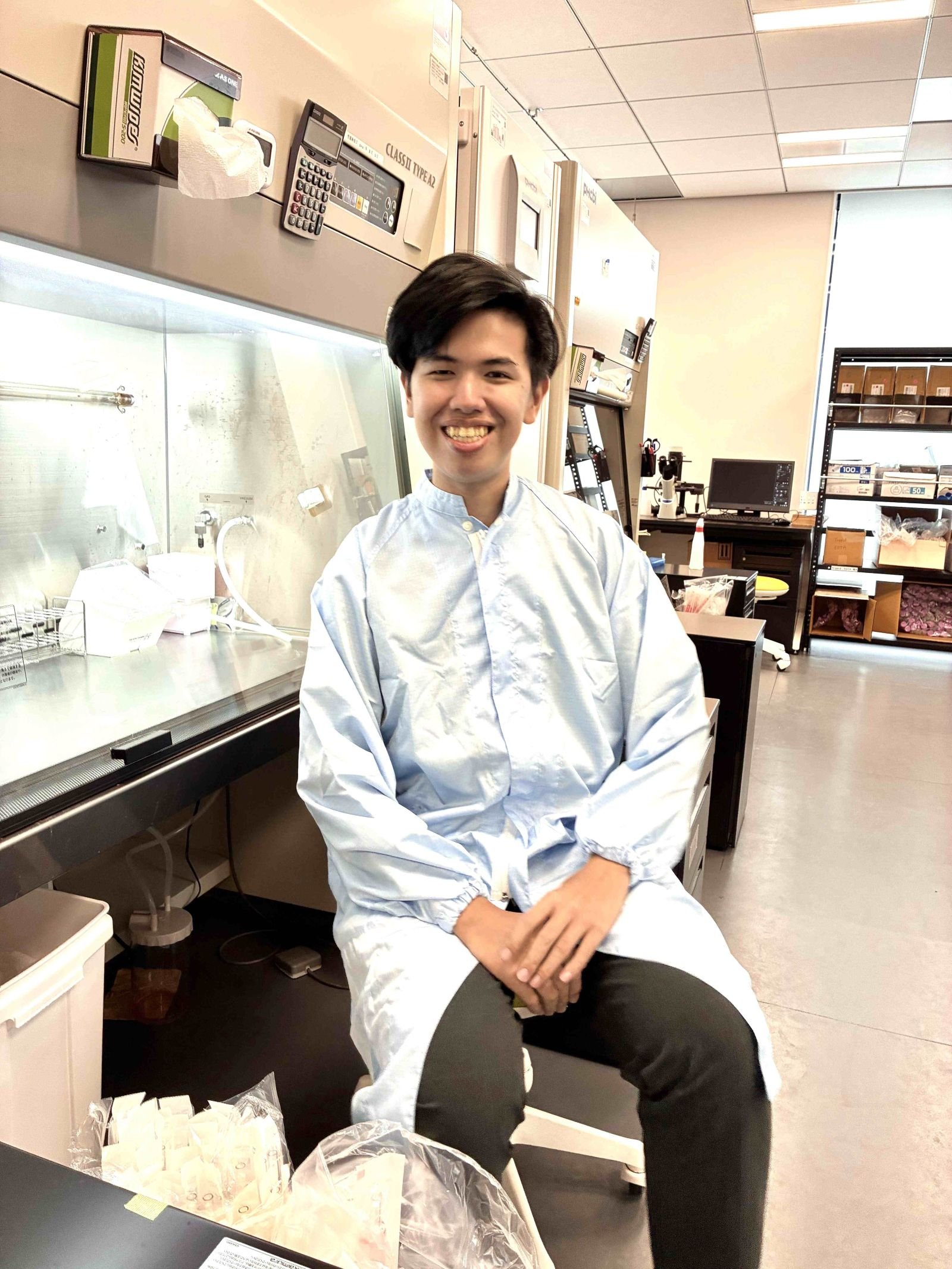
Roy Xiao
Second-year graduate student
Graduate Institute of Communication Engineering
National Taiwan University
Q. What made you decide to join this internship program?
Xiao:
iPS cell technology is at the very frontier of regenerative medicine, and CiRA Foundation is one of the key drivers behind iPS cell manufacturing, so I feel very fortunate to have been able to join this program. Coming from a computer science and engineering background, I have always been curious about how AI can be integrated with frontier technical fields, biotechnology in particular. I believed that experiencing the actual situation on the front line would give me a different perspective when interpreting data in the future, and a different angle from which to approach difficult problems. That is what motivated me to join.
Q. During the six-week internship that began in July, you experienced wet-lab work for the first time. What surprised you most?
Xiao:
"Uncertainty" and "time." Most manufacturing and engineering processes, including software development, are repeatable and controllable. iPS cells are not. They are living organisms, and the variability is enormous: the condition of the donor, temperature and humidity, the technique of each individual operator, how the cells are passaged, and much more. Simply defining and documenting these SOPs is already extremely difficult itself. Every experiment consumes a large amount of time, money, and manual labor, and a single mistake in the process can undo everything. That is why every single data point generated here is so precious.
Also, this was the first time I had ever seen cells grown with my own hands. Watching them gradually develop into iPS cells or cardiomyocytes, and especially seeing the cardiomyocytes start beating in the dish, was genuinely exciting and eye-opening. That moment made me feel, “This is the future.”
Q. Did you discover unexpected connections between this program and your field of study?
Xiao:
I had never operated biological instruments or equipment before, but in electrical engineering, we also do things like soldering with an iron and taking measurements on components, and the hands-on feel turned out to be surprisingly similar to cell culture work. What was different was that, as the cells grew, I found myself instinctively thinking from an engineering standpoint about why the phenomena we observed were happening.
At one point, for example, I started wondering whether an ordinary microscope image could be used to estimate the surface topography of the cells, and I immediately began thinking about how the AI tools I already know could help with that interpretation. I think this kind of cross-disciplinary combination is valuable precisely because it surfaces questions that the field itself might not have asked, and then lets you attempt to solve them.
Q. Has your experience working with cells in our laboratory changed the way you look at or interpret data?
Xiao:
Although my field is not life science, I had previously done some work on genomic and medical data analysis, and I always thought carefully about how to interpret the output of a machine learning model. But without hands-on experience in the lab, a lot of that interpretation came down to guesswork. In data science, deciding which features matter and how to explain them is exactly the part we have to wrestle with.
After working with cells, I realized that, much like in image interpretation tasks, there are many signals and features that I would simply never have been aware of if I had only ever worked in the dry lab. You only learn about them by being on site.
Going forward, when I look at any dataset, I will be asking why a particular feature is being extracted and what causes that feature to arise in the first place. I think I now have a much sharper instinct, and I will be able to form better hypotheses.
Q5. How would you like to use what you learned from this experience in your future career?
Xiao:
This program gave me a strong long-term interest in the intersection of AI and biomedical data standardization, and it also sharpened my attention to detail and my powers of observation. Concretely, I would like to keep working on how signal and image processing methods can be applied to biological data, with a much better sense of the experimental context behind each measurement.
More broadly, I have come to believe that the value of working across disciplines is not about "switching fields." It is about taking the way of thinking you have built up in one field and bringing it into another to generate new kinds of questions, and that often produces unexpectedly good results.
Q. What message would you like to share with students who are interested in life science but do not specialize in it?
Xiao:
Don't let your own specialization limit you. Stay open-minded, stay curious, and try and think as much as you can. Trust that the expertise you have built up so far can be useful, and can genuinely contribute, in fields you know nothing about yet. At the same time, always stay humble and keep learning.
If you find iPS cell research fascinating but hesitate because you have no experience, don't be afraid. Just start doing it and learn as you go. I think the experience will have a real impact on your future, both professionally and academically. There are so many gaps between what you assume and what is actually true, and you only really understand them once you are standing in that environment yourself.
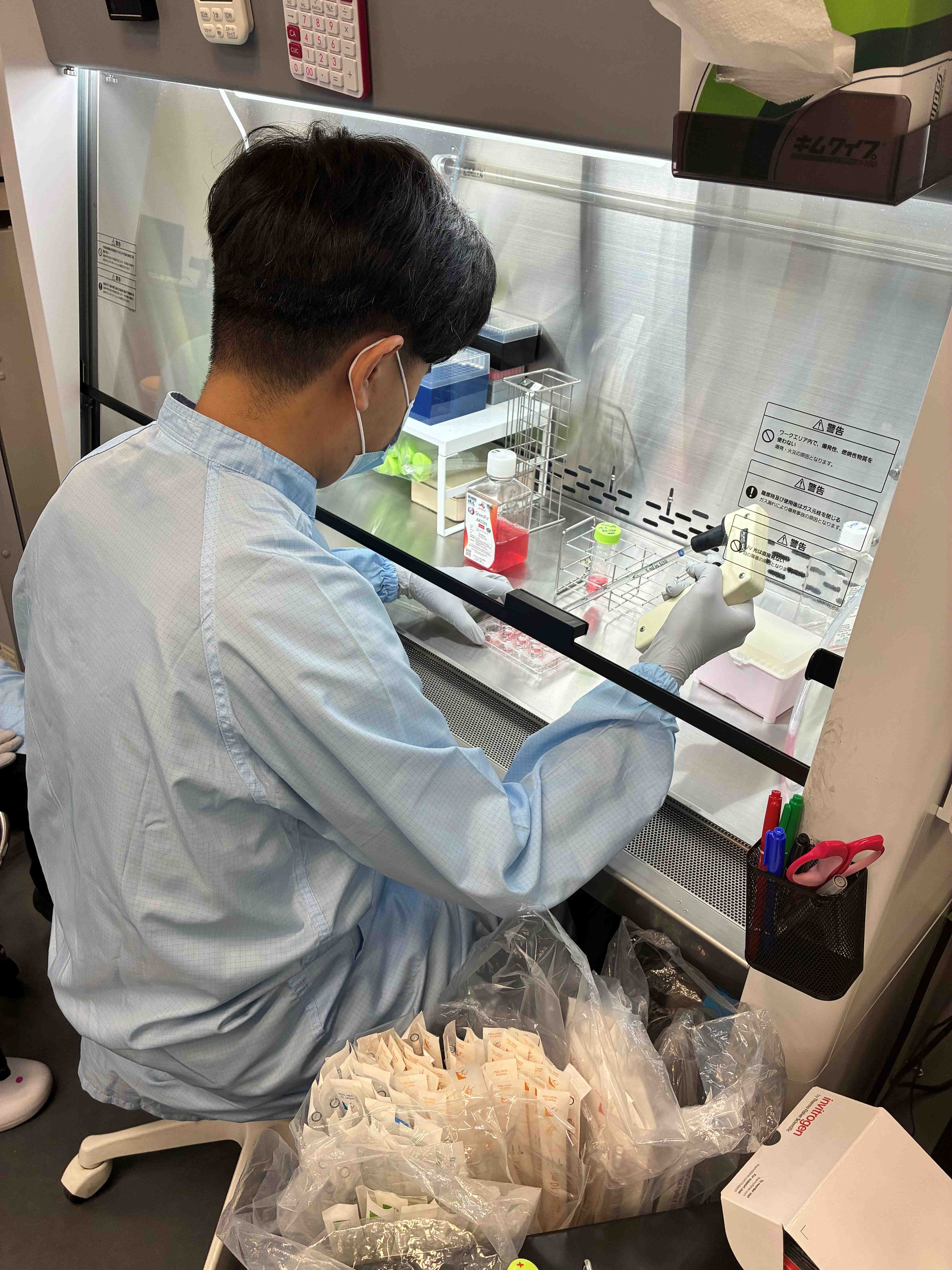
The CiRA Foundation will continue to support the career development of undergraduate and graduate students through the Uehiro Future Scientists Program.