
Uehiro Future Scientists Program Trainee Interview Vol.1
―Exploring Human Evolution and Physical Traits through iPS Cells―
Training
This year, we launched the program to provide hands-on experience in iPS cell technologies. The first trainee is Yuka Nakamura, a second-year doctoral student in the Department of Biological Sciences at the Graduate School of Science, The University of Tokyo. Her anthropology research focuses on genetic information from ancient humans.
“I have always been fascinated by questions such as: Why has humankind evolved? How did biological diversity arise? For my graduate studies, I examine genetic data from ancient humans. Research on the DNA of ancient populations such as the Jomon and Yayoi people not only reveals insights into their lifestyles and migration patterns but also provides clues about physical traits, including disease resistance.”
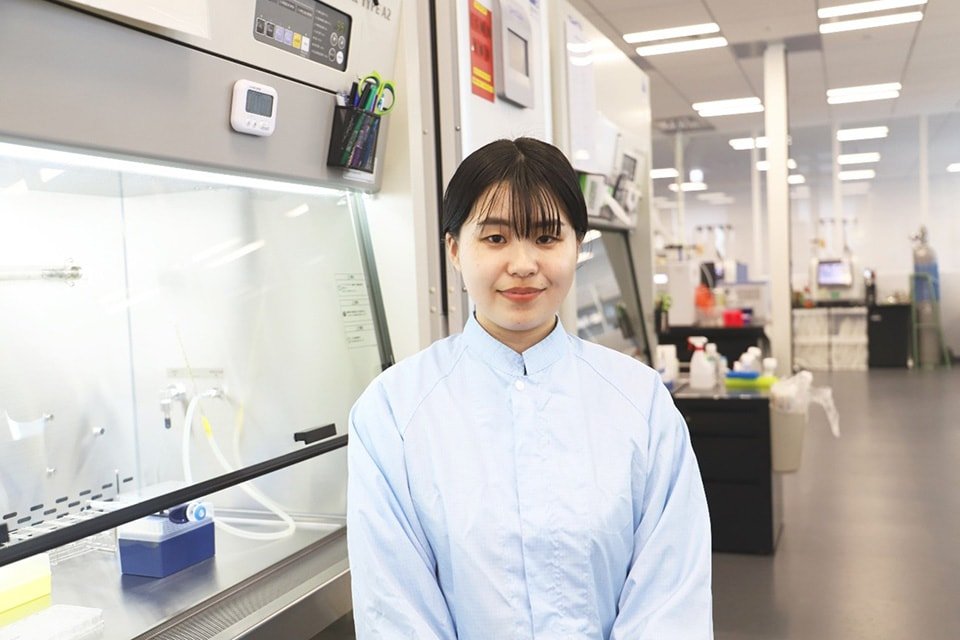
Yuka Nakamura
Second-year doctoral student
Department of Biological Sciences
Graduate School of Science
The University of Tokyo
iPS cells are widely recognized for their applications in regenerative medicine and drug discovery. In anthropology, they are also utilized to compare genetic information between ancient and modern humans.
“Analyzing ancient DNA reveals numerous differences. For example, the Jomon genome is associated with higher alcohol tolerance, whereas the Yayoi genome indicates a lower tolerance. Why did low tolerance spread across the Japanese archipelago? What factors led to these genetic differences? I wanted to explore these questions not only through DNA analysis but also at the cellular level, which led me to consider using iPS cells. Since I did not have any opportunities to learn iPS cell techniques from specialists previously, I started searching for ways to acquire these skills and found this career development program, which I am very fortunate to join.”
During the program, Ms. Nakamura learned fundamental techniques for generating and culturing iPS cells under the guidance of experts at our Research and Development Center. She successfully created iPS cells from somatic cells of modern individuals carrying genetic traits inherited from Jomon and Yayoi ancestors, using samples provided by her laboratory at The University of Tokyo.
“I am grateful for the rare opportunity to be directly guided by iPS cell specialists, who are always happy to answer my questions. I learned many things that I could not otherwise learn on my own, such as troubleshooting minor technical problems. The reagents required for iPS cell generation are extremely expensive, so having the chance to use them in actual experiments is invaluable. The program also offers flexibility, allowing me to engage in additional experiments that may benefit my future research. Overall, it has been an incredibly fulfilling experience.”
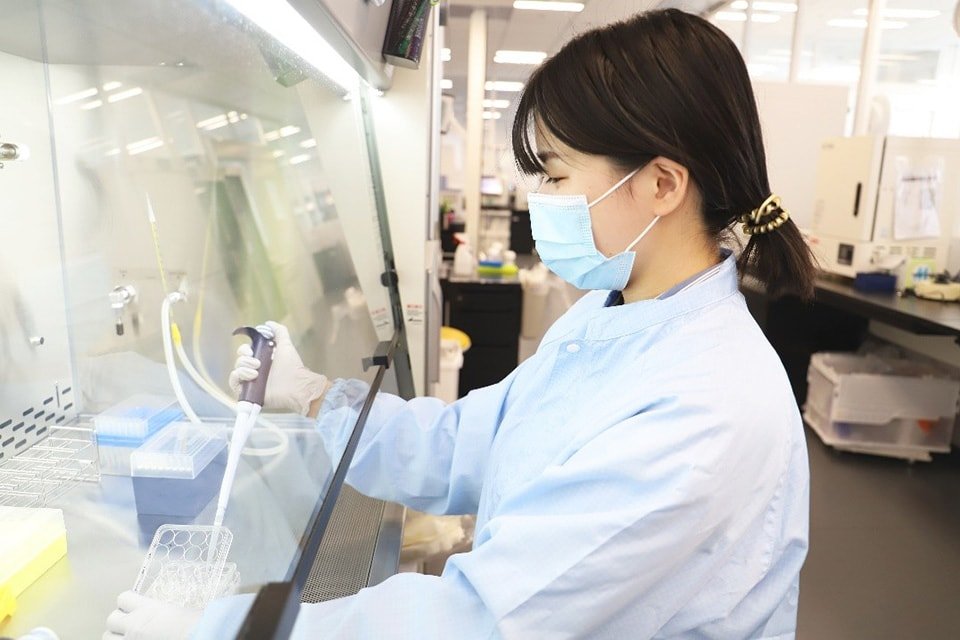
Looking ahead, Ms.Nakamura plans to bring the iPS cells generated during the program back to her laboratory in Tokyo, differentiate them into liver cells, and investigate various physiological functions, including alcohol metabolism in ancient populations.
“Although I feel a little uncertain about reproducing these techniques independently, I will undertake the challenge to create differentiated cells from iPS cells and apply what I have learned to my research.”
Our foundation will continue to support the career development of undergraduate and graduate students through the Uehiro Future Scientists Program.