
Uehiro Future Scientists Program Trainee Interview Vol.2
―Exploring Brain Function and Barrier Mechanisms through iPS Cell Research
Training
This time, we are pleased to introduce Hiromu Watanabe, a second-year student at the Faculty of Pharmaceutical Sciences, Tokyo University of Pharmacy and Life Sciences, where he is engaged in research on the blood–brain barrier.
The blood–brain barrier is a natural defense mechanism that prevents harmful substances in the bloodstream from reaching the brain. However, this barrier can also block the entry of therapeutic drugs. To identify effective means for delivering drugs into the brain, Mr. Watanabe aims to recapitulate the blood-brain barrier and study its function by combining iPS cell-derived brain and vascular organoids¹.
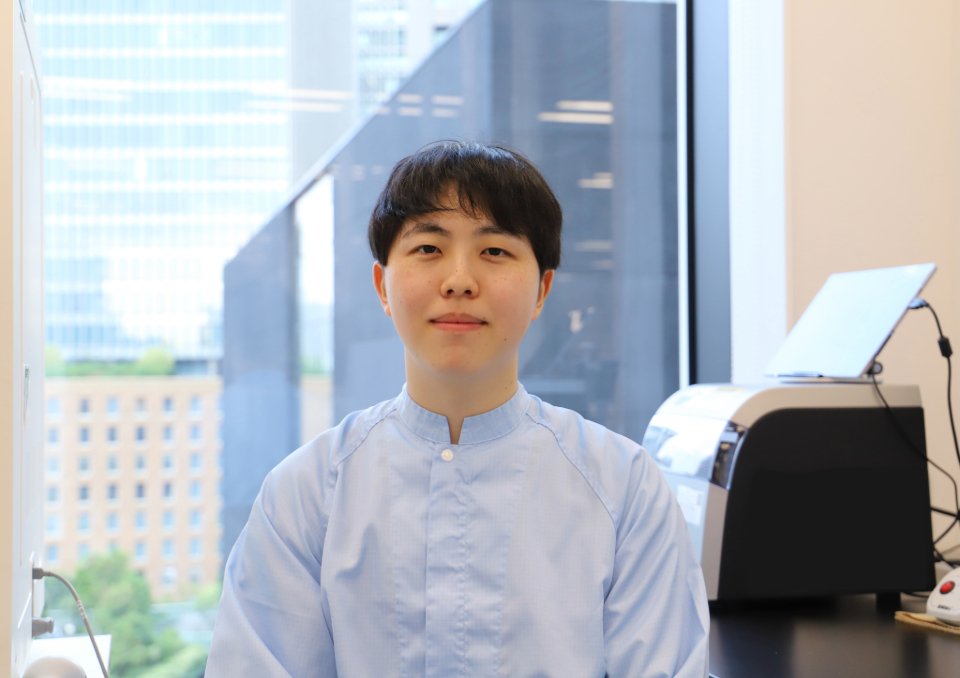
Hiromu Watanabe
Second-year student
School of Pharmacy
Tokyo University of Pharmacy and Life Sciences
Mr. Watanabe will begin his studies at University College London (UCL) in the United Kingdom in September. During high school, he studied abroad in Canada and graduated from a local high school, where he developed a strong interest in biology and regenerative medicine.
Reflecting on his motivation, he shares, “When my father underwent surgery, I wondered why anesthesia prevents pain. Through research, I learned that anesthetic drugs cross the blood-brain barrier to reach neurons. At the same time, I discovered that many drugs cannot penetrate the brain, and I began to question why this difference exists—even as a high school student.”
Driven by this curiosity, Mr. Watanabe chose Tokyo University of Pharmacy and Life Sciences, which hosts a laboratory specializing in blood-brain barrier research.
“I was able to conduct diverse research in my desired laboratory, meet inspiring professors, and join this program—opportunities I could never have reached on my own,” he says. As a participant of the Uehiro Future Scientists Program, Mr. Watanabe cultured neurons and glial cells to study the role of osteopontin, a protein involved in inflammation. He explored how this protein influences the brain’s barrier function, aiming to uncover insights that could lead to future therapies.
He also worked on creating blood-brain barrier organoids from iPS cells—a challenging task, as the brain’s vascular structure is uniquely tight and highly selective. It was a first attempt, even for researchers at the CiRA Foundation’s Research and Development Center. Together, they exchanged ideas and learned cell culture and analytical techniques as a basis for future research.
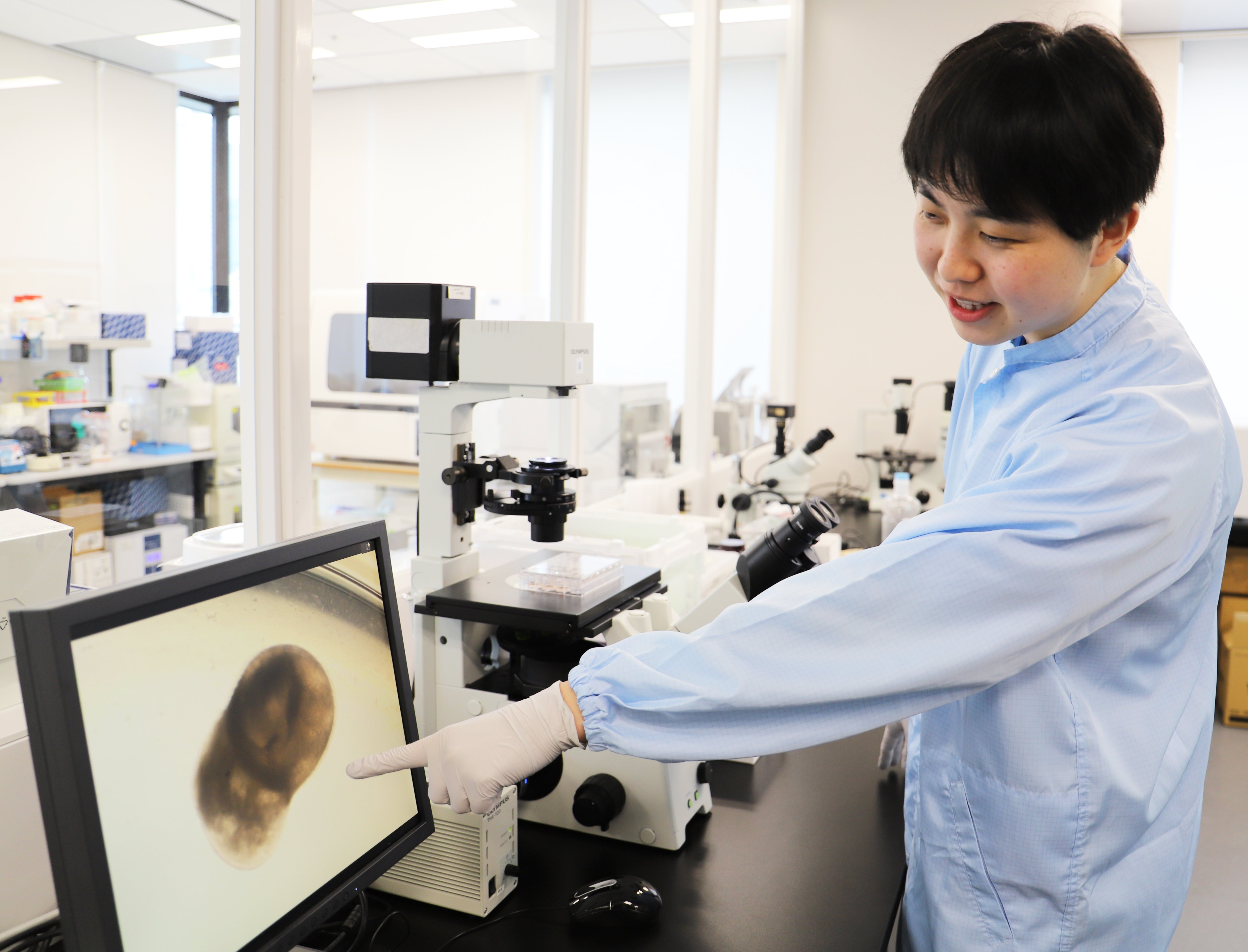
“At university, I gained solid training in cell culture and gene expression analysis, which prepared me for this program. Here, I learned the importance of identifying research questions, designing experiments, and thinking independently—a truly invaluable experience,” he reflects.
Beyond the lab, Mr. Watanabe spent his first summer living alone in Osaka, embracing both intellectual and personal challenges.
Looking ahead, he explains, “My goal is to become a researcher who discovers drugs for neurological diseases that currently have no treatment. I am excited about my upcoming research in the UK, and I still have many ideas I want to pursue in Japan. If only I could clone myself to work on all of them at once,” he adds with a smile.
Through the Uehiro Future Scientists Program, our foundation is committed to supporting the career development of undergraduate and graduate students, such as Mr. Watanabe.